Petrikivka

Petrykivka, Dnipro region · UNESCO 2013

One brush.Two colours.Four generations.

A Petrykivka brush is loaded with two paints at once, and the stroke it lays carries both along its length. That stroke came down from Tetiana Pata to her student Vasyl Sokolenko, from him to Andrii Pikush, and from him, at the kitchen table, to his daughter Oksana. This is where it is kept, explained and taught.

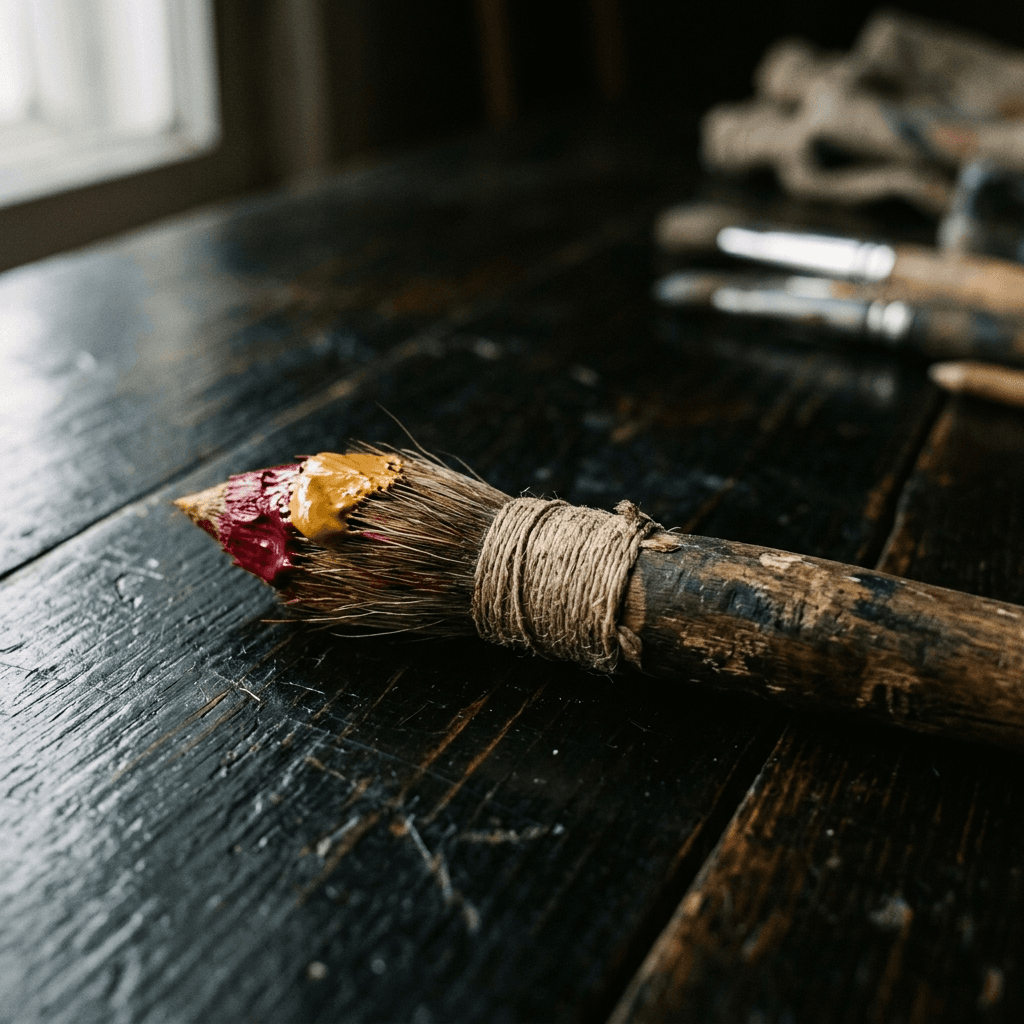
A handmade Petrykivka brush of soft hair bound with linen thread to a wooden handle, its tip loaded with carmine and ochre paint at the same time
The loaded brush · interpretation, photographed for this site

The technical signature

Перехідний мазок

perekhidnyi mazok · the transition stroke

The painter charges one brush with two pigments and pulls a single stroke. The colour changes inside the mark itself, so a petal turns from carmine to ochre without a second pass and without a line where they meet. Petrykivka painters work straight onto the surface with no drawing underneath, which is why this one move carries so much: there is nothing to correct it against.

The berries are set with a fingertip. The finest lines are drawn with a sharpened stem of marsh reed. The brushes are made by the painters themselves from soft animal hair bound to a stick — and every class Oksana Pikush teaches in Canada is painted with brushes carried over from Petrykivka.

The full glossary of named strokes →
A plain black lacquered wooden plate on a dark surface under raking light

The line

Four teachers, one unbroken handover

Petrykivka is transmitted by hand, from one person to the next. This platform is run from inside that transmission, at its current end.

  1. 01

    Tetiana Pata

    Тетяна Пата · 1884–1976

    The teacher the school came from

    She painted the walls and the paper sheets of Petrykivka before anyone called it a school, then taught the first formal class in the village. Nearly every master working today traces a teacher back to her.

    Source ↗
  2. 02

    Vasyl Sokolenko

    Василь Соколенко · 1922–2018

    Her student, who taught for seventy years

    Pata's pupil, and the last of her direct students to still be working in the 2010s. He died at 96. Among the people he taught were Andrii Pikush and Maria Pikush.

    Source ↗
  3. 03

    Andrii Pikush

    Андрій Пікуш · b. 1950

    People's Artist of Ukraine · Shevchenko Prize 2025

    Born in Petrykivka, taught by Sokolenko, and since 1991 the founder and chairman of the Centre of Folk Art “Petrykivka”. Merited Master of Folk Art in 1981, People's Artist of Ukraine in 2013, the Kateryna Bilokur Prize in 2009 and the National Taras Shevchenko Prize in 2025.

    Source ↗
  4. 04

    Oksana Pikush

    Оксана Пікуш · Petrykivka → Canada

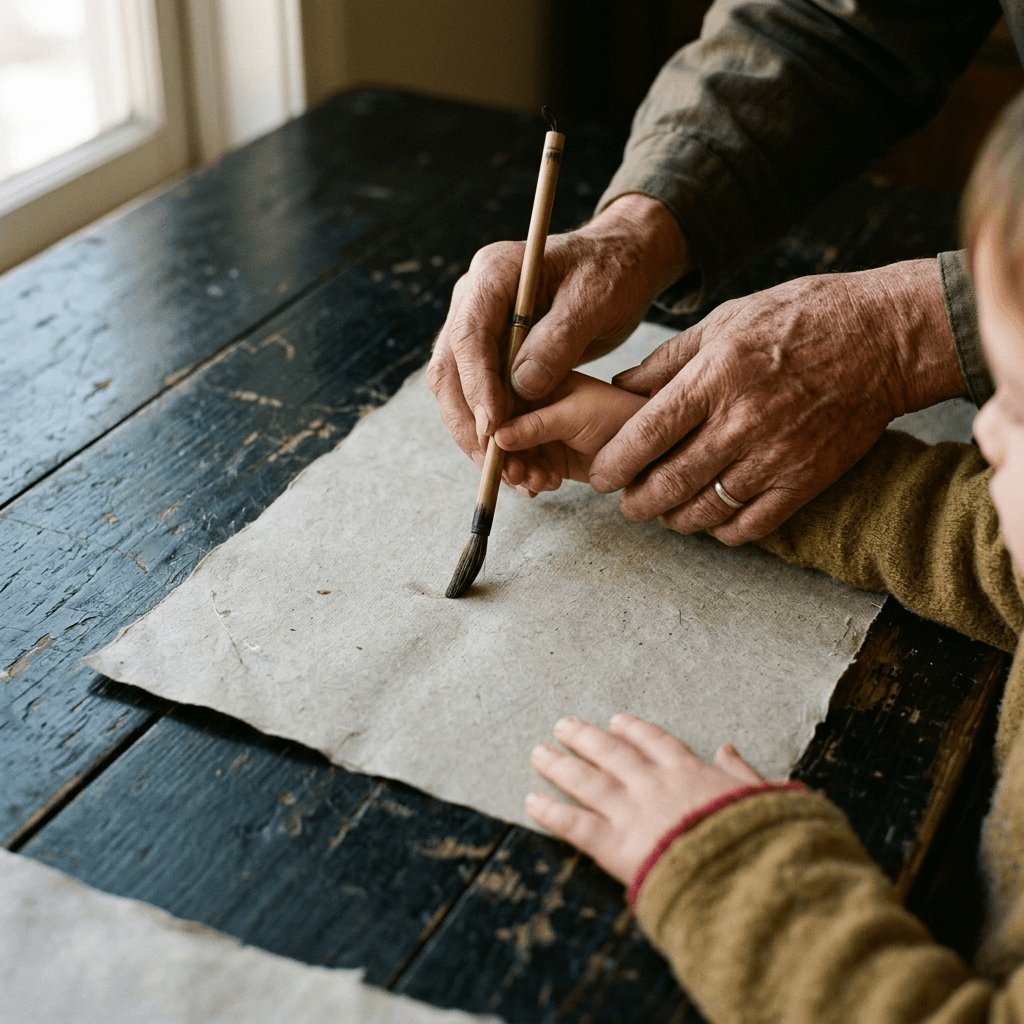
    His daughter, taught at the kitchen table

    Born and raised in Petrykivka and taught the craft at home by her parents, Andrii and Maria Pikush, together with the master Ivan Dmytriuk. She paints interiors and murals, and she teaches — bringing handmade Petrykivka brushes to every class she runs in Canada.

    Source ↗
An older hand guiding a child's hand that holds a thin brush over paper

The part with a clock on it

The people taught by Pata’s own students are in their eighties

Vasyl Sokolenko, Pata’s pupil and Andrii Pikush’s teacher, worked until he died at 96. The generation he taught is the last that learned in the village before the factory, and much of what they know has never been written down or filmed. The Living Archive exists to record them painting and talking, in Ukrainian, while that is still possible.

Launch list

Follow the masters, the recordings and the classes

Mail goes out when a master’s page is published, when a recording is added to the archive, and when a class opens. Everything else stays off this list.