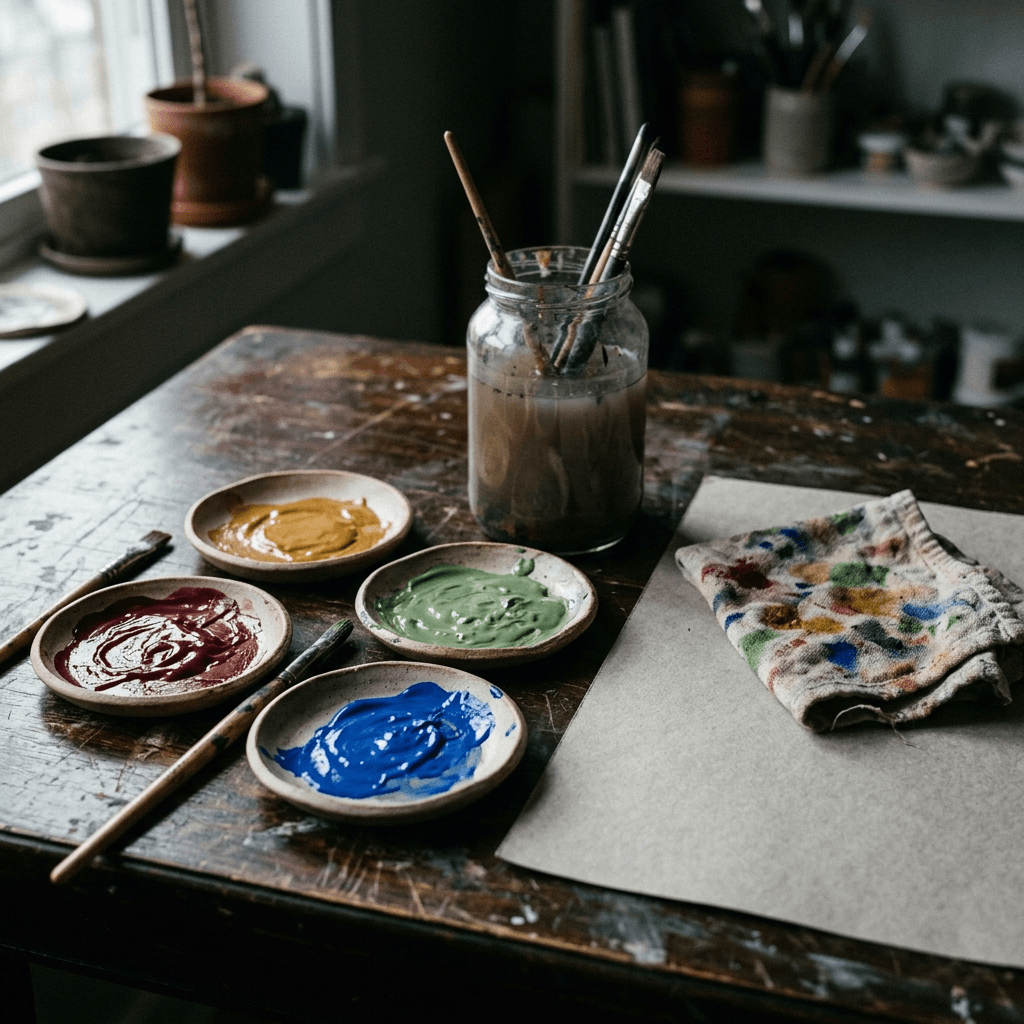
The fine work is done with a brush the painter makes herself, traditionally from soft cat fur bound to a stick — the кошачка. The thinnest lines of all, the tracery the painters call петушиння, come off its tip. A sharpened stem of marsh reed draws the hairline work, and the berries are set with a fingertip.
Colour came from the fields before it came from a shop: cherry juice for red, couch grass and nightshade leaves for green, blue squill for blue, sunflower petals, onion skin and apple-shoot bark for the yellows, with chalk, local clays and soot for wall work. It was bound in egg yolk and milk and fixed with cherry gum or beet sugar. Cheap aniline dyes arrived at the end of the nineteenth century, and the range specialists call traditional — pink, green, yellow and a little blue on white paper — is that early aniline one. Gouache and watercolour became normal only after the Second World War.
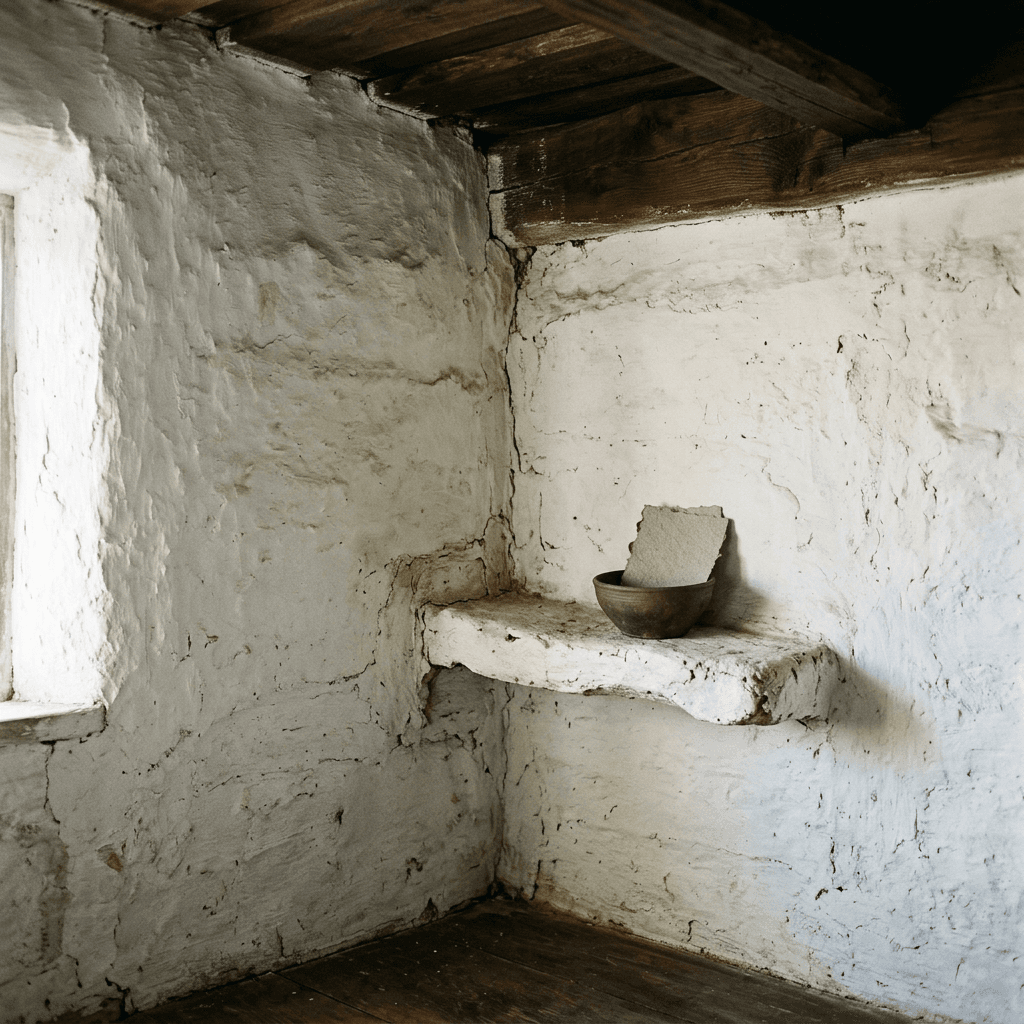
The black lacquered objects most people picture came from somewhere else. Painting under lacquer on a black ground was introduced at the Shevchenko souvenir factory in Kyiv, where Petrykivka women who had moved to the city worked, and it returned to the village afterwards; the Druzhba factory then made it the public image of the craft. The historic ground here is white — a limewashed wall or white paper — and Panko's experimental workshop deliberately worked back toward light grounds after 1970.
The painting is laid straight onto the surface with nothing drawn underneath. That single fact explains the whole vocabulary of named strokes: a painter is building from marks she can place without correction.
The glossary of named strokes →