Petrikivka

About · who runs this

A platform run from inside the line it documents

Petrikivka keeps one tradition in public: the history with a source under every line, the masters with their own consent, the technique as it is actually taught, and paid work routed to the people who paint. It is built with Oksana Pikush — born in Petrykivka, taught at her parents’ table, and the fourth name in the handover this site records.

Who

The fourth pair of hands in a line of four

Oksana Pikush was born and raised in Petrykivka and learned the painting at home. Her teachers were her parents and the master Ivan Dmytriuk. Her father, Andrii Pikush, is a People’s Artist of Ukraine and a laureate of the National Taras Shevchenko Prize of 2025; he organised the masters’ association in 1991 that merged into the Centre of Folk Art «Petrykivka» in 1998, and he has headed the Centre since. Her mother, Maria Pikush, is an Honoured Master of Folk Art.

Oksana paints interiors and murals and teaches children and adults, handing out brushes carried over from Petrykivka at every class she runs.

Behind her the line runs back through Vasyl Sokolenko, who taught her father and worked until he died at 96, to Tetiana Pata, who taught the first formal class in the village. Four names, each with a page here and a source under every title.

Two gaps on this page are deliberate. The city she works in stays out until she gives it herself, because no source we reached names it — [CITY TO CONFIRM WITH OKSANA]. And the site holds no photograph of her own painting yet — [PHOTOGRAPHS OF HER WORK TO COME] — so the images standing in for them are interpretation shots, and say so in their captions.

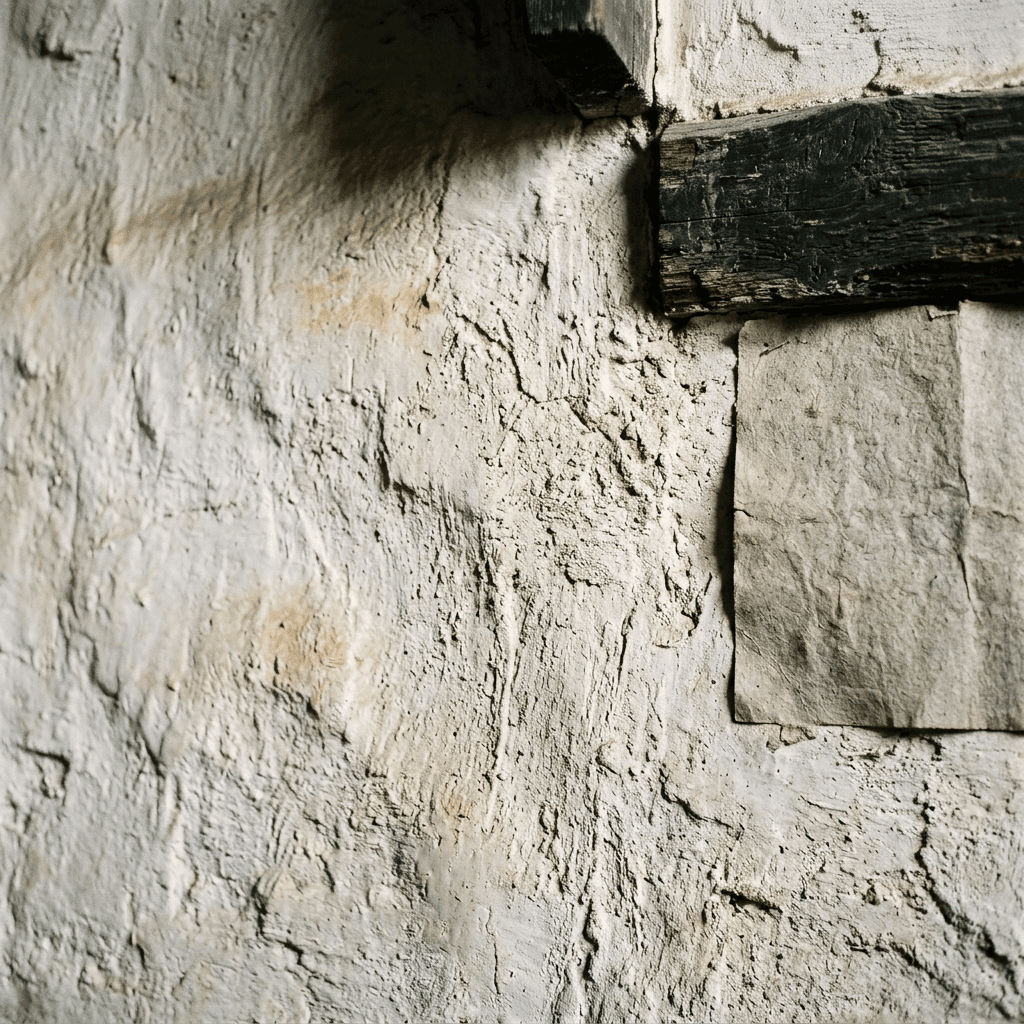
An old whitewashed clay wall seen at a steep raking angle, reading purely as chalky hand-troweled texture
A limewashed wall · interpretation, photographed for this site

Six rules

The editorial rules we hold ourselves to

These govern what goes on a page and what stays off it. They are here so a master, a museum or a buyer can hold us to them by name.

01

Every claim carries a source

A statement about history, transmission, dates, titles or institutions is traceable to a stored source record, and the link sits on the page beside the claim. A sentence that cannot be sourced is cut or rewritten until it can be. Figures we modelled ourselves are marked as models, and a fact we are still missing appears as a bracketed gap in the text, visible to every reader.

02

Where sources disagree, the page says so

A worked example sits inside this project. A festival team described Andrii Pikush as the man who created and toured a 250-work exhibition that travelled fifty countries and led to the UNESCO inscription. Contemporary reporting says something narrower: the exhibition that opened at the European Parliament in Brussels did so on the evening of 29 January 2013, it showed more than ninety works by folk masters of the Dnipropetrovsk region, and an oblast delegation presented it. Further showings in Belgium and France were planned. The inscription followed that December in Baku.

His profile carries the sourced version, and the larger claim stays off the site in both languages until the Centre produces a catalogue or a list of venues that settles it. This row is where the difference is recorded.

Центр народного мистецтва «Петриківка»
03

Folklore about symbols is marked as interpretation

Lists of what every flower supposedly means circulate widely and rarely carry a source. Where this site gives a meaning, it names whose reading it is. The UNESCO file itself records examples — birds standing for light, harmony and happiness, the rooster for fire and spiritual awakening — and even those are given here as documented readings held by a community, with the context they came from.

UNESCO element 00893
04

Ukrainian spellings, Ukrainian names

Петриківка is Petrykivka. Names are transliterated from Ukrainian: Андрій Пікуш is Andrii, Тетяна Пата is Tetiana, Василь Соколенко is Vasyl. Craft terms keep their Ukrainian form and their apostrophes — пуп’янок, кучерявка, петушиння — and stand in Ukrainian on the page before any gloss of them in English.

05

No work shown without its author named and its rights recorded

An image of a painting goes up with the painter named, the rightsholder recorded and the permission on file: what it covers, where it may appear and for how long. An image that arrives without that record stays off the site, however good it looks. The same applies to photographs of people, including children.

06

Generated imagery is labelled, every time

The photographs here of brushes, pigments, paper, limewash and hands were generated as interpretations for this site, and every caption says so in the same words. None of them shows a master’s painting, and none of them will ever be sold, licensed or offered as one. Ornament published on this platform is the work of a named author.

The floor

What this platform will never do

Three commitments, written concretely enough that you can catch us breaking them.

Sell an imitation as the real thing

The record travels with the object

A work offered here is traced to the person who painted it, with materials, date and rights written down before it is listed. A printed or machine-made image is labelled as what it is, on its own page, in the same type as everything else around it.

List a master who has not agreed

Consent first, in writing, and revocable

A profile goes up when the master, or the family holding the rights, agrees in writing and supplies what should appear. Nobody arrives here from a search result. A master can ask for their page to come down at any time, and it comes down without a reason being required.

Let a sponsor’s name cover the painter’s

The credit line belongs to the hand

Funders are named plainly on the page their money paid for, with the amount and the purpose. The painter’s name stays first on the work, in the caption and in the file that carries it. Which sponsors are accepted at all is decided by [REVIEW BODY TO BE AGREED WITH THE MASTERS].

Contact

Corrections, permissions and everything else

One address carries all of it: a correction to a page, a request to be listed, a request to be taken down, a question about the rights to an image, a class, a commission, or a recording for the archive.

A correction that names the page and the source you hold gets a reply and a dated note on the page itself, so the change is visible to the next reader. The site is published by [LEGAL ENTITY AND COUNTRY TO CONFIRM].